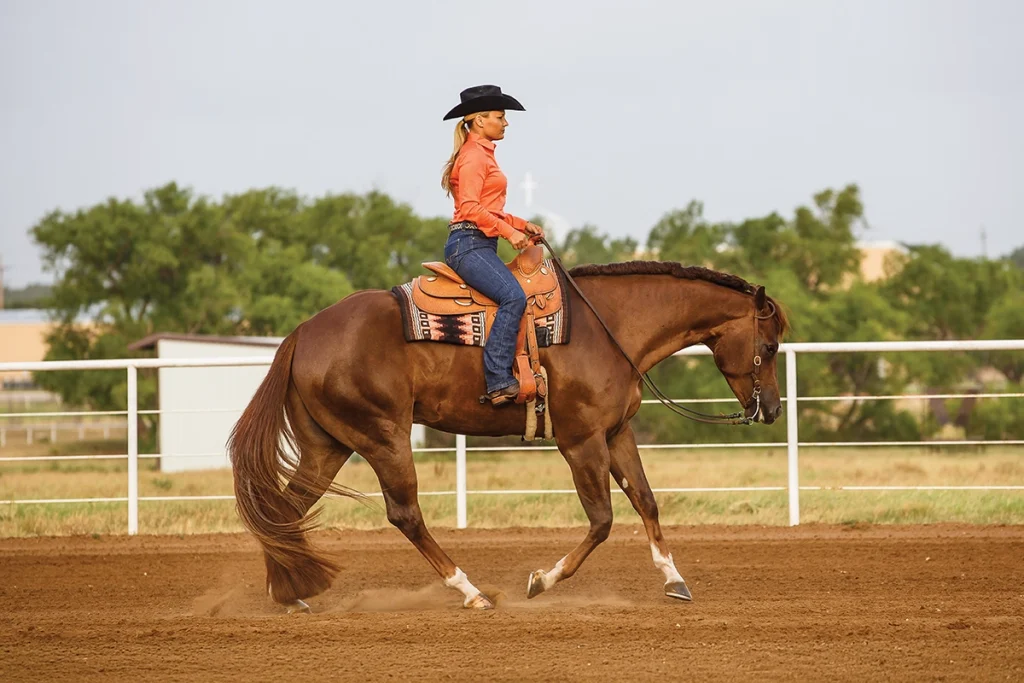
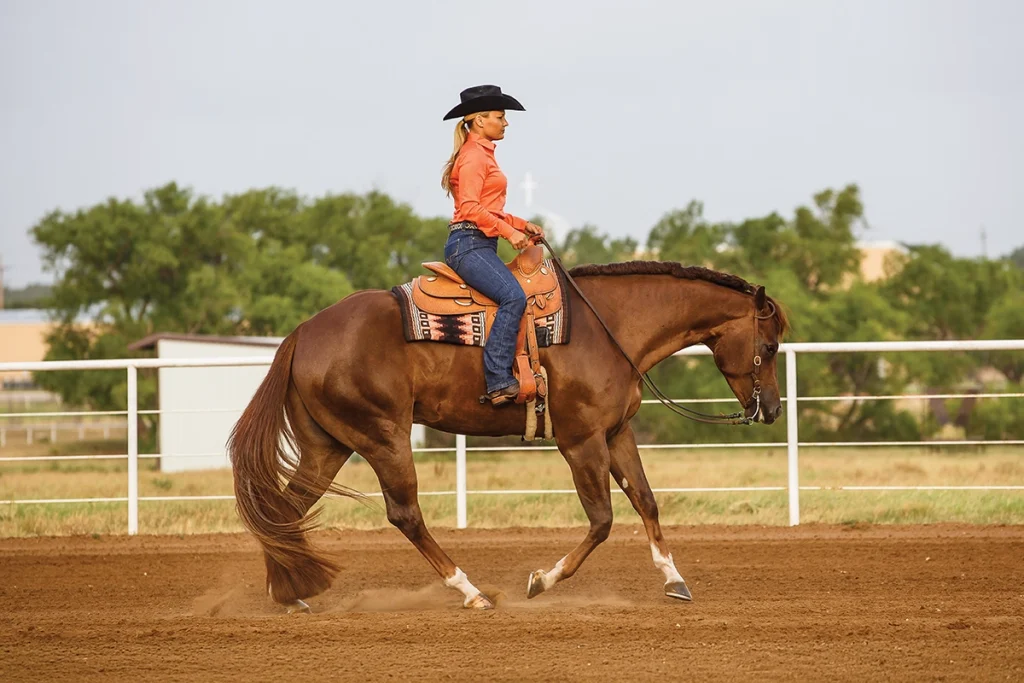
Generally, when people picture Western riding, they tend to imagine rodeo events, reining, or cow classes, all of which are usually fast-paced, explosive and electrifying. But there are other Western sports that showcase a horse’s quiet disposition and smooth way of traveling. The most popular of these is Western pleasure. Much like its name suggests, horses that participate in the event should be a pleasure to ride and to watch, a quality that makes the discipline popular with anyone from green riders to seasoned veterans.
What is Western Pleasure?
Western pleasure is a rail class held at breed and open shows during which exhibitors walk, jog and lope their horses each direction around the perimeter of the arena on a loose rein. The goal is to make the horse look as smooth as possible, and everything, from the rider’s attire to their equipment, should contribute to that overall picture. According to the American Quarter Horse Association (AQHA), judges rank exhibitors according to their correctness, quality, and degree of difficulty.
Correctness is defined as the ability of the horse and rider to properly perform each gait throughout the majority of the class. Quality refers to the overall gracefulness and movement of the horse—he should have a relaxed expression, topline, softness of movement, consistency, and length of stride. Degree of difficulty is influenced by “exhibiting a pleasure horse at a pace and speed that allows for correctness and best quality of a gait for that individual.”
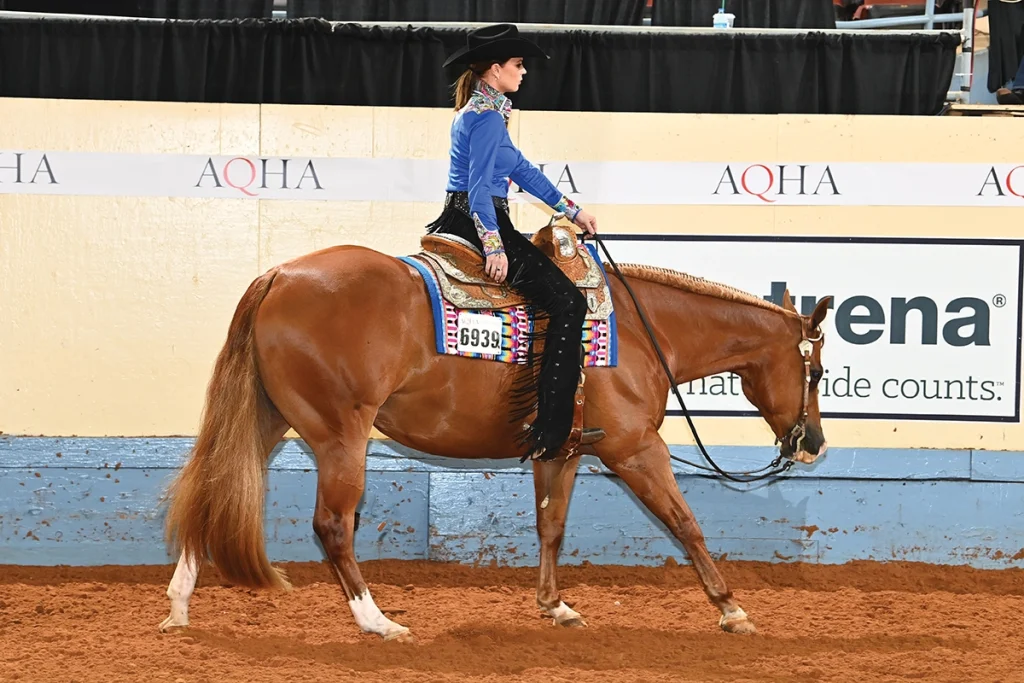
Over the years, some riders have taken degree of difficulty to the extreme, resulting in a “the slower the horse, the better” attitude. AQHA clearly states, however, that “slowness that sacrifices correctness or negatively impacts quality shall be considered incorrect and a poor performance at best.” Rather than worrying about speed, it’s better to show your horse at his own natural rhythm and cadence.
Judging Western Pleasure
Western pleasure isn’t scored like reining or cutting; instead, judges watch an entire class of horses and riders perform different gaits as a group and then place the pairs they feel best exemplify what a pleasure horse should look like. As horses move through the different gaits, there are certain qualities a judge looks for.
The Walk: The walk, a flat-footed, four-beat gait, should appear natural, with the horse moving straight and true. The horse should stride out and appear alert.
The Jog: The jog is a slower trot that is easy to sit without posting. It should be a ground-covering and two-beat diagonal gait. The feet should display forward movement; a horse that is trotting with its front feet but walking with the back end is not performing a true jog. Judges may ask exhibitors to extend the jog, during which horses should still appear smooth as they move out.
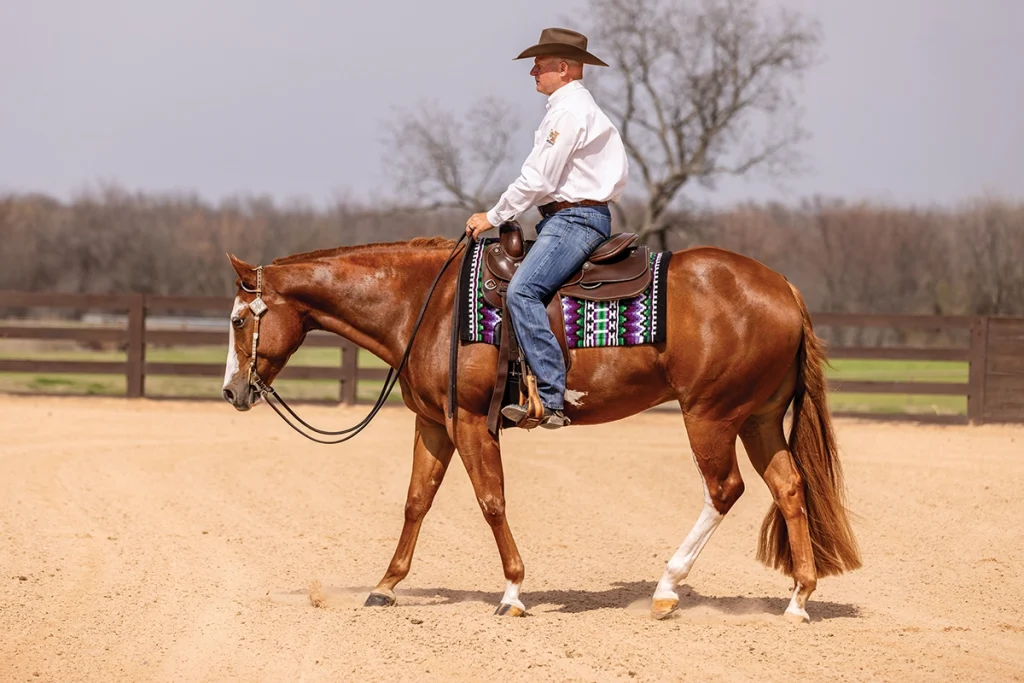
The Lope: The lope is a three-beat gait—not four beats. Horses should be ridden at a speed that is natural for them and should be on the correct lead depending on which direction they are moving.
No matter which gait the horse is performing, his head should be carried at a natural angle, depending on his conformation, and should not be in an overexaggerated headset.
The Organizations
Most stock horse breed organizations offer Western pleasure classes at their events, including AQHA, American Paint Horse Association (APHA), Palomino Horse Breeders Association, American Buckskin Registry Association and the Appaloosa Horse Club. Other associations that offer pleasure classes include the Arabian Western Pleasure Association, Interscholastic Equestrian Association, Pinto Horse Association of America and National Snaffle Bit Association (NSBA).
Popular for Rookies and Veterans
Western pleasure, with its smooth gaits and gentle way of going, provides an attractive option for beginners. After all, AQHA Professional Randy Wilson says riding a pleasure horse should be pleasant. Many green riders have started off riding pleasure horses to gain confidence, giving them the foundation they need to eventually compete or even switch to another equine sport.
“For a lot of people, that’s where they get their start, even if they move on to other disciplines,” Wilson says. “A broke pleasure horse is a pleasure to ride, and I think that’s probably the biggest reason why people get hooked on it.”
It’s not just rookies that appreciate pleasure horses, though. Many professional and long-time riders enjoy trying to master the challenges that come from showing upper-level pleasure horses, as well. Wilson, who has been training and showing pleasure horses for 30 years, is one such horseman.
“Everyone thinks it’s very simple to do it, but to do it at a high level is very difficult,” Wilson says. “First of all, you have to find a good enough horse that has the ability, and then you have to get them to the level they need to be to go show in the futurities. It’s quite a challenge, and it’s had my attention for many years. Once you get them to that level, you get rewarded, and then you get more hooked on it.”
Major Events Showcasing Western Pleasure
The AQHA World Show in Oklahoma City; the NSBA World Show in Tulsa, Okla.; the APHA World Show in Fort Worth, Texas; and the World Championship Appaloosa Show in Fort Worth are all top-tier events for Western pleasure horses. Local open and breed shows are also held around the country.
Additionally, events like the All American Quarter Horse Congress and Color Breed Congress offer Western pleasure classes, and there are Western pleasure futurities open to 2- and 3-year-old horses.
Getting Started in Western Pleasure
Whether you’ve been riding for years or are just starting out, if you think you’d like to get involved with Western pleasure, the best place to start is by contacting someone that has been doing it for a while, according to Wilson. You can find those people by reaching out to your state’s Quarter Horse association or a national organization like the NSBA or AQHA to get recommendations based on your wants and needs. From there, Wilson advises calling or visiting different trainers to find one you click with.
This article about Western pleasure appeared in the Summer 2025 issue of Western Life Today magazine. Click here to subscribe!
The post An Overview of Western Pleasure appeared first on Western Life Today.
Meet the Stallion: Spooks Gotta Whiz
Spooks Gotta Whiz is one of the most recognizable names in the reining horse industry. Not only is the 2007 bay stallion annually in the top two sires of National Reining Horse Association (NRHA) top money earners, last year he also stepped back into the arena as a 17-year-old to [...]| Play | Cover | Release Label |
Track Title Track Authors |
|---|